
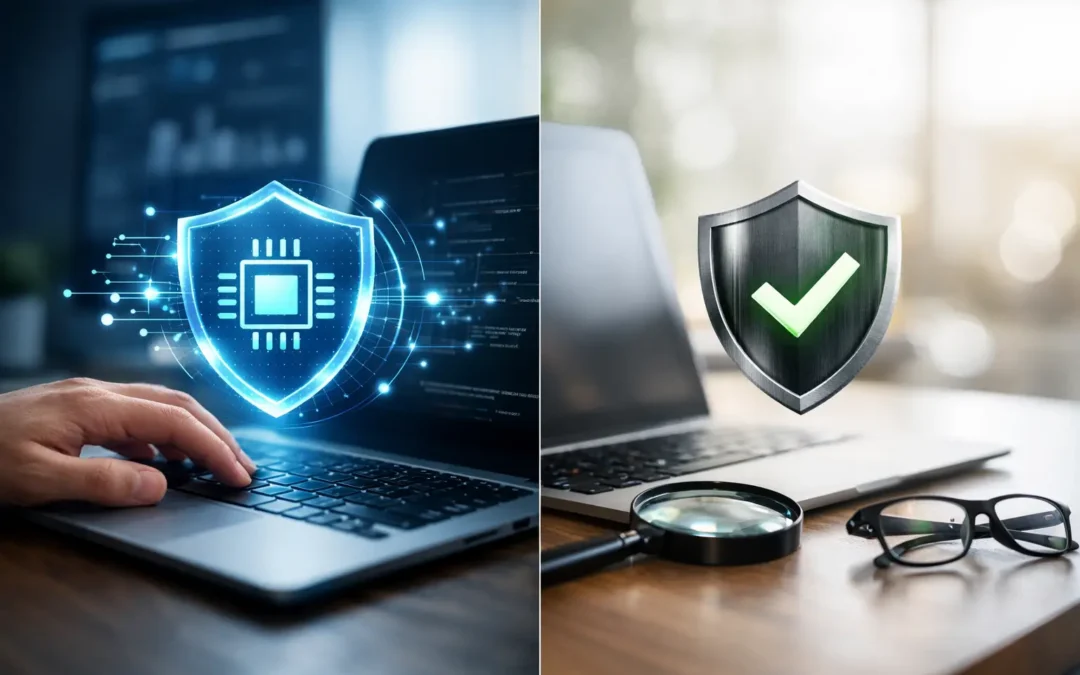
A compromised employee laptop can become a business interruption in minutes. It may start with a convincing invoice attachment, a stolen Microsoft 365 password, or an unpatched application. The practical question behind EDR vs antivirus for business is not which tool has the better name. It is whether your organization can prevent a threat, recognize suspicious activity quickly, and contain the damage before operations, client data, or revenue are affected.
For many Central Florida businesses, traditional antivirus remains a sensible baseline. But as ransomware, credential theft, and targeted phishing continue to evolve, antivirus alone may leave gaps that a growing organization cannot afford to discover during an incident. The right choice depends on your risk, regulatory obligations, internal resources, and how much disruption your business can tolerate.
What Traditional Antivirus Does Well
Antivirus software is designed primarily to prevent known malicious files and programs from running on a device. It examines files, downloads, email attachments, and system activity for signatures and patterns associated with malware. Modern business antivirus products also commonly include behavior-based detection, web filtering, exploit prevention, and cloud intelligence.
That is a meaningful layer of protection. A properly deployed, centrally managed antivirus platform can stop many common threats before an employee ever notices them. For smaller organizations with limited technology budgets, it is often the first endpoint security control to put in place.
Antivirus is especially effective when it is part of good security hygiene. Automated patching, multifactor authentication, secure backups, email filtering, and employee awareness all reduce the number of opportunities an attacker has to gain a foothold.
The limitation is that prevention tools must make quick decisions, often with limited context. An attacker who uses legitimate credentials, built-in system utilities, or a previously unseen technique may not trigger a traditional antivirus alert. The malicious behavior can look like ordinary business activity until someone examines the bigger picture.
EDR vs Antivirus for Business: The Core Difference
Endpoint detection and response, or EDR, goes beyond scanning for malware. It continuously collects and analyzes endpoint activity, such as processes that run, files that change, scripts that execute, network connections, and login behavior. Its purpose is to identify potentially malicious activity, investigate what happened, and help contain the threat.
Think of antivirus as a security guard checking whether someone is carrying a known prohibited item. EDR is closer to a monitored security system that records movement, identifies unusual behavior, and helps responders trace where an intruder went after entering the building.
If an employee opens a harmful attachment, antivirus may block the file before it launches. If the file succeeds in launching and begins encrypting documents, modifying security settings, or trying to access other systems, EDR can provide the visibility needed to detect that sequence, isolate the computer, and investigate related devices.
EDR does not replace every antivirus capability. In many platforms, endpoint protection and EDR work together. The prevention component blocks what it can, while the detection and response component supplies deeper monitoring and response options when prevention is not enough.
Why Visibility Matters During an Incident
The cost of a cyber incident is rarely limited to one infected computer. A successful attacker may spend days or weeks gathering credentials, identifying shared drives, accessing financial information, or preparing ransomware before the visible damage begins.
Without endpoint visibility, an organization may know that a device has an alert but not know the answer to the questions that matter most: Was data accessed? Did the activity spread to other users? Which account was used? Is the attacker still active? Can the device be safely returned to service?
EDR tools are intended to help answer those questions. They can show a timeline of activity, connect related events, flag unusual commands, and support actions such as isolating an endpoint from the network. That can shorten investigation time and reduce the chance that a single compromised device turns into a broader outage.
This matters greatly for firms that handle sensitive client or patient information, rely on shared engineering files, process financial transactions, or operate under compliance requirements. For these organizations, the ability to demonstrate a measured response may be nearly as important as preventing the initial event.
EDR Is Not a Set-It-and-Forget-It Product
More protection does not automatically mean better protection if nobody is equipped to act on the alerts. EDR can generate valuable security information, but it also requires oversight. A suspicious PowerShell command, failed login sequence, or unexpected network connection may be malicious, or it may be part of normal software behavior.
A business with an experienced internal security team may choose to manage EDR directly. Many small and mid-sized organizations do not have staff available around the clock to review alerts, investigate activity, and make containment decisions. In that case, EDR is most effective when paired with a managed detection and response service or a trusted IT partner that can provide monitoring, escalation, and guidance.
There is a trade-off. Managed oversight adds ongoing cost, but it can provide the people and process required to turn endpoint data into timely action. Buying a sophisticated EDR license without defining who owns response may create a false sense of security.
Your response plan should answer practical questions before an alert occurs. Who can authorize isolation of a device? Who contacts the employee? How are business-critical applications kept available? When should legal counsel, cyber insurance, or outside incident response specialists be involved? Technology supports these decisions, but it cannot make them for you.
When Antivirus May Be Enough
Traditional antivirus may be an appropriate starting point for a very small organization that has low-risk data, limited endpoint complexity, and strong supporting controls. It can also be suitable when budget constraints require you to address the most fundamental security gaps first.
That does not mean selecting the cheapest consumer-grade product and installing it device by device. Business protection should be centrally managed, kept current, and reviewed regularly. Devices that are not reporting, users with disabled protection, and recurring detections should be visible to the people responsible for IT.
If your organization has no multifactor authentication, inconsistent patching, or unreliable backups, those priorities should be addressed alongside endpoint security. EDR cannot compensate for every weakness in an environment.
When EDR Is the Better Business Decision
EDR becomes more compelling as the potential impact of an incident rises. Organizations should strongly consider it when they have remote or hybrid staff, store regulated information, support multiple locations, use cloud platforms extensively, or cannot tolerate extended downtime.
It is also a prudent choice for businesses that have become targets because of their role in a supply chain. Architecture and engineering firms, legal practices, healthcare providers, financial organizations, government contractors, and nonprofit groups may all hold information that is valuable to attackers or essential to ongoing services.
Businesses with 50, 100, or more users also face a simple operational reality: manual investigation does not scale well. When dozens of endpoints generate routine activity every minute, centralized visibility and response capabilities help IT teams focus on events that present real business risk.
Ransomware readiness is another deciding factor. Backups remain essential, but they do not eliminate the impact of stolen data, operational delays, recovery work, client notification obligations, or reputational harm. EDR can help identify attacker behavior before encryption is the first sign that something is wrong.
How to Choose the Right Endpoint Strategy
Start with business impact rather than a feature checklist. Identify the systems, data, and processes that cannot be unavailable for a day or even a few hours. Consider how a compromised device could affect payroll, client service, access to project files, patient information, or financial operations.
Then assess your ability to respond. If a security alert arrives after hours, does someone know how to investigate it? Can your team isolate a computer without disrupting a critical employee or application? Do you have current backups that have been tested for restoration? Clear answers reveal whether an EDR platform, managed monitoring, or both are warranted.
Also look at deployment and compatibility. Endpoint tools need to work across the devices your employees actually use, including desktops, laptops, servers, and remote systems. They should be configured to avoid unnecessary conflicts with line-of-business applications while still protecting against common abuse techniques. A careful rollout, testing period, and policy review are far better than installing software everywhere without a plan.
Cost should be measured against risk, not just per-device licensing. A lower-cost antivirus solution may be appropriate for one business, while another could face substantial losses from a few hours of downtime or a data exposure. The best value is protection that matches your environment and is actively managed.
Security Works Best as a Managed Practice
Endpoint protection is one part of a larger security program. Strong passwords and multifactor authentication reduce account takeover. Patch management limits known vulnerabilities. Email security reduces phishing exposure. Tested backups support recovery. Employee training helps people recognize the social engineering attempts that technology may not stop.
For organizations that need help connecting those controls, ITIT works as a local technology partner to align cybersecurity investments with operational needs. The goal is not to add tools for their own sake. It is to build practical protection that reduces downtime, supports compliance, and gives leadership confidence that incidents will be handled with a plan.
The better question is not whether EDR or antivirus is universally best. It is whether your business has the prevention, visibility, and response capacity needed for the risks it faces. A focused security assessment can turn that question into a clear, manageable set of next steps.